Aftermarket Exhaust and Jetting: What Size Jet Do You Need?
Upgrading your exhaust changes your jetting needs. Learn how aftermarket exhaust jetting works, what sizes to run, and how to calculate the right jet.
Why Your Exhaust Pipe Affects Jetting
Aftermarket exhaust jetting is one of the most common tuning questions in the powersports world, and it makes sense. You bolt on a shiny new pipe, and suddenly the bike runs worse than it did with the stock exhaust. What happened?
It comes down to airflow. Your carburetor is calibrated from the factory to deliver a specific fuel-to-air ratio based on a specific exhaust backpressure. When you swap in a freer-flowing aftermarket system, that backpressure drops. The engine pulls more air through on each stroke, and the fuel delivery that was "right" yesterday is now lean.
Running lean isn't just a performance issue; it's a heat issue. A lean condition raises combustion temperatures, and sustained lean running can score pistons, burn valves, and cause seizures. This is why jetting after an exhaust swap isn't optional.
Slip-On vs. Full System: How Much Does It Matter?
Not all exhaust swaps are equal. The degree of jetting change depends heavily on which type of exhaust you're installing.
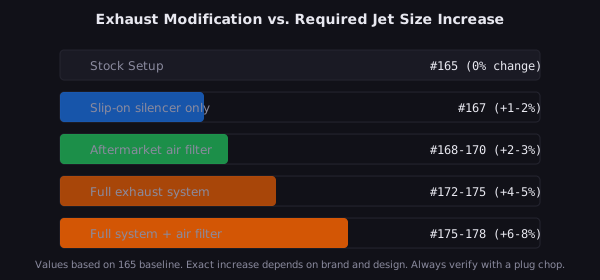
Slip-on muffler only: A slip-on replaces just the muffler section, leaving the stock header pipe in place. The header is where most of the scavenging effect happens, so a slip-on has a relatively modest impact on jetting. You're typically looking at 1-2 jet sizes richer, sometimes nothing at all on bikes with conservative stock jetting.
Full exhaust system: A full system replaces both the header and muffler. This is where you see real airflow changes. Header diameter, taper, and length all affect how aggressively the engine scavenges. A well-designed aftermarket full system can pull noticeably more air, which means a more significant jetting correction, usually 3-5 jet sizes on the main jet.
The header material (stainless vs. titanium) doesn't affect jetting. Titanium is lighter; that's the only difference that matters for tuning purposes. Don't let anyone tell you otherwise.
Brand Comparisons: FMF, Yoshimura, and Stock
Different manufacturers tune their pipes for different characteristics, and that affects how much jetting correction you'll need.
FMF: FMF pipes, particularly the Powercore 4 and Q4 slip-ons and the Megabomb full systems, tend to be on the aggressive side for flow. Their full systems often require a 4-6 jet size bump on the main jet. FMF publishes jetting recommendations by bike model on their website, which is a solid starting point.
Yoshimura: Yoshi pipes are generally tuned for a broader powerband rather than peak peak flow. Their RS-2 and RS-4 full systems typically need a 3-5 size main jet increase. They're a bit more forgiving if you're slightly off.
Stock vs. aftermarket: The stock exhaust on most Japanese bikes is heavily restricted, both by the muffler packing and often by a baffle disc in the header. The jetting jump from stock to a quality aftermarket system is almost always in the lean direction, meaning you need to go up in jet size to compensate.
A Real Calculation Example
Here's a concrete scenario: a 2019 Honda CRF450R running a 168 main jet with the stock exhaust. The owner installs an FMF Titanium 4.1 full system.
FMF's jetting guide lists a 4-5% fuel enrichment recommendation for this combination. The math:
- Stock jet: 168
- 4% richer: 168 × 1.04 = 174.7 → round to 175
- 5% richer: 168 × 1.05 = 176.4 → round to 176
So the correct starting point is a 172-175 main jet (Keihin jets are sized in even numbers for that range). The rider would start at 172, do a plug chop at full throttle, and verify the burn color before committing to a final size.
Use the jetting calculator to start with your baseline conditions, then apply this 4-5% bump on top of that adjusted size.
Combining an Exhaust with an Air Filter Upgrade
Many riders do both at once: aftermarket exhaust plus a performance air filter (like a Twin Air or No-Toil). That's a fine combination, but understand that the jetting correction is additive.
A performance filter alone might require a 1-2 jet size increase. Add a full system, and you're looking at a combined 5-8 sizes richer on the main jet vs. stock. That's a significant change, and it's worth working through each variable systematically rather than guessing at a combined number.
The process: start with the altitude and temperature correction using our jetting calculator, then layer in the exhaust correction, then the filter correction. Keep notes as you go.
Step-by-Step Process After Installing an Exhaust
- Find your baseline. Note the current main jet and pilot jet sizes before you swap anything.
- Check the manufacturer's jetting guide. FMF, Yoshimura, and most other brands publish model-specific recommendations. These are real starting points, not guarantees.
- Calculate for your conditions. If you're at altitude or in hot weather, those corrections apply on top of the exhaust correction. Check out our guide on rejetting for altitude for the full breakdown.
- Install the recommended jet. Start on the rich side if you're unsure; rich is safer than lean.
- Do a plug chop. This is non-negotiable. Read the color at wide-open throttle (WOT) to confirm your main jet is in the right range. A tan or light brown color confirms correct jetting. Black means rich; white or grey means lean.
- Adjust as needed. Move 1-2 jet sizes at a time. Don't chase the perfect tune in one day.
- Re-check the pilot circuit. If you've changed the main jet by more than 5 sizes, the transition between circuits may need attention. Read our breakdown of pilot jet vs main jet to understand when you need to address both.
What If the Bike Came With the Pipe Already Installed?
If you bought a used bike with an aftermarket exhaust already on it, you don't know what jetting was done (if any) by the previous owner. Start with a plug chop to see where you stand. A rich condition is safer to start with; a white or grey plug at WOT is urgent.
Also check whether the previous owner installed a jet kit or just changed the main jet. A full jet kit usually addresses the needle clip position and pilot jet as well. A main-jet-only change can leave the mid-range transition rich or lean even if WOT is correct.
Summary
Aftermarket exhaust upgrades almost always require a richer main jet. Plan on 1-2 sizes for a slip-on and 3-5 sizes for a full system as a baseline. Combine that correction with altitude and temperature data from our carb jet size tool, verify with a plug chop, and you'll be tuned correctly rather than just guessing.
The pipe is only as good as the tune behind it.
Related Articles
How to Rejet Your Carburetor for High Altitude
Learn how to rejet carburetor altitude changes step by step. Includes a real WR250F example going fr…
automotivePilot Jet vs. Main Jet: When to Adjust Each
Pilot jet vs main jet confusion causes most jetting failures. Learn which throttle ranges each contr…
Free Tool
Carburetor Jet Size Calculator
Calculate the correct carburetor jet size based on altitude, temperature, and engine modifications for optimal air-fuel ratio tuning.
Use the Calculator →CarburetorJet.com Team
Powersports enthusiasts and engine tuning specialists with 15+ years of carburetor tuning experience across motorcycles, ATVs, and karts.