DIY Jetting vs. Dyno Tune: When Each Is Worth It
DIY jetting or a professional dyno tune? Learn when a carburetor jet size calculator gets the job done and when you need a dyno, with real cost comparisons.
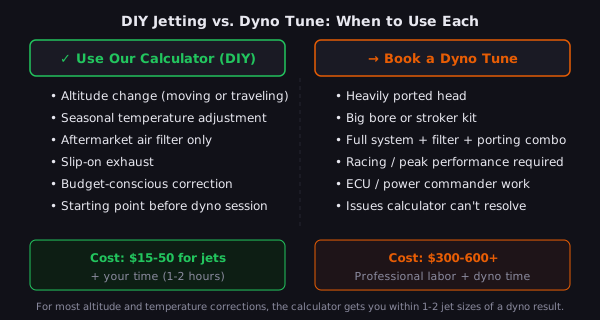
The Question Every Carb Tuner Faces
You've got a carbureted bike and something's not right. Maybe you're heading to a high-altitude ride, or you just bolted on a full exhaust system, and now the thing bogs at full throttle. The question is simple: do you grab a jet kit and sort it yourself, or do you book time on a dyno?
Both approaches work. They just solve different problems. Knowing which one fits your situation saves you money, time, and a lot of frustration.
What a Dyno Tune Actually Does
A dynamometer measures your engine's power output at the rear wheel across a range of throttle positions and RPM. The tuner watches air-fuel ratio (AFR) in real time using a wideband oxygen sensor, adjusts jetting until the AFR curve looks right, and records the result.
The output is a power curve, a graph showing horsepower and torque across the RPM range. More importantly for jetting, it shows exactly where the mixture is rich or lean at every throttle position. That's valuable data. But it comes at a price: $300 to $600 or more for a full session at most shops, depending on your area.
When the Calculator Is the Right Tool
For most riders doing altitude or temperature corrections, our carburetor jet size calculator gives you a correct starting point without the dyno cost.
Altitude changes. You're jetted correctly at home and you're riding 3,000-5,000 ft higher. The physics of this change are well understood. Our tool applies the same ISA (International Standard Atmosphere) model that FAA.gov uses for density altitude calculation. For a simple altitude correction, the calculator typically gets you within one jet size of what a dyno would recommend. That's the difference between a 165 and a 162. Easy to verify with a plug chop.
Seasonal jetting. Summer to winter at the same elevation is a significant air density change. At 5,000 ft, a 45°F drop in temperature changes air density by about 8%. That's 2-3 jet sizes, and it's entirely predictable. Run the numbers, make the swap, read the plug.
Slip-on exhaust or air filter alone. These are well-characterized modifications. A slip-on silencer typically requires 1-2 jet sizes richer. An aftermarket air filter adds another 1-2. Our calculator's engine modification factors are based on published jetting guides from Dynojet Research and Mikuni, the same sources shop tuners reference.
Budget-conscious approach. A set of jets runs $15-50 depending on brand. If the calculator gets you 90% of the way there, you can afford to buy a three-size spread and test your way to perfection. That's still cheaper than one dyno session.
When You Actually Need a Dyno
Some situations genuinely require a dynamometer. No calculator replaces real-time AFR measurement when the engine's airflow characteristics have changed significantly.
Ported cylinder head. Porting changes the volumetric efficiency of the engine in ways that aren't captured by simple percentage factors. The relationship between airflow and fuel demand becomes non-linear. A dyno reads actual AFR; a calculator only estimates it.
Big bore or stroker kit. Displacement changes alter the engine's torque curve, breathing characteristics, and fuel demand across all throttle positions, not just main jet territory. Pilot jet, needle, and main jet all need evaluation together. A dyno session sorts all three at once.
Multiple simultaneous modifications. Full exhaust + air filter + ported head + big bore = too many variables stacking up. Each modification affects the others. A calculator can account for independent factors, but the combined effect on a heavily modified engine needs measured data.
Racing applications. If you're chasing tenths on a stopwatch, a dyno tune is worth every dollar. Peak power at the rear wheel is the goal, and optimizing to within 0.5 AFR at full throttle requires precision of live data.
The Real Cost Comparison
Let's look at a concrete example. You have a Yamaha WR250F jetted at sea level with a #165 main jet and a #42 pilot. You're riding in Colorado at 8,000 ft.
DIY route: Run the calculator with 165 at sea level / 70°F → 8,000 ft / 60°F. Result: approximately a #155 main. Buy a #152, #155, and #158 for $12-15 each. Total cost: $40-45 and an afternoon of wrenching. Plug chop confirms #155 is correct.
Dyno route: Shop time at 8,000 ft costs $300-500+. The dyno would tell you the same thing: #155 main. You'd get a power graph too, but for a simple altitude correction, that's expensive confirmation of something the calculator already told you.
Where the dyno earns its cost is when you add a Rekluse clutch kit, a titanium exhaust, and a ported cylinder head all at once. Now you've changed the engine's characteristics so much that a calculated estimate is just a starting point.
Getting the Most from a Dyno Session
If you do book a dyno, come prepared. Install the jets from our calculator first. This saves the tuner 2-3 baseline pulls and cuts your session time. Show up with a clean carb, fresh plug, and known baseline jetting.
A well-prepared dyno session takes 2-3 hours. A poorly prepared one runs all day at your expense.
See how we built our calculation approach at about our methodology. For standard jetting adjustments, the calculator is the right first move. Check our common jetting mistakes guide before your next tuning session.
The Bottom Line
DIY jetting with a good calculator covers the vast majority of what riders actually need: altitude corrections, seasonal changes, and simple bolt-on modifications. It costs under $50 and takes a Saturday morning.
A professional dyno tune is right for heavily modified engines, racing applications, or when calculator-based jetting hasn't resolved the issue. Start with the calculator. Verify with a plug chop. Only reach for the dyno when the situation genuinely demands it.
Related Articles
How to Rejet Your Carburetor for High Altitude
Learn how to rejet carburetor altitude changes step by step. Includes a real WR250F example going fr…
automotive7 Carburetor Jetting Mistakes That Wreck Your Tune
Carburetor jetting mistakes cost you performance and can damage your engine. Here are the 7 most com…
Free Tool
Carburetor Jet Size Calculator
Calculate the correct carburetor jet size based on altitude, temperature, and engine modifications for optimal air-fuel ratio tuning.
Use the Calculator →CarburetorJet.com Team
Powersports enthusiasts and engine tuning specialists with 15+ years of carburetor tuning experience across motorcycles, ATVs, and karts.