How to Read a Spark Plug for Jetting Issues
Spark plug reading for jetting is the most reliable way to verify your carb tune. Learn the plug chop procedure, color guide, and what each burn pattern means.
Why the Plug Tells You the Truth
Spark plug reading for jetting is the ground truth of carb tuning. You can guess at jet sizes based on symptoms, or you can look at physical evidence of combustion and know exactly what's happening. The plug doesn't lie.
Every time your engine fires, the combustion byproducts leave a chemical signature on the plug's insulator tip and electrode. Reading that signature correctly takes practice, but once you know what to look for, you'll never waste money on guesswork jetting again.
This guide covers the plug chop procedure, how to interpret what you see, and the differences between reading for two-strokes and four-strokes.
The Plug Chop: How to Do It Right
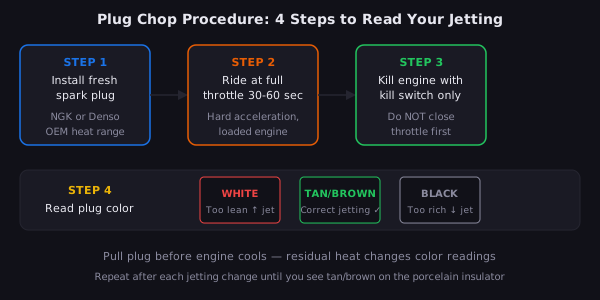
A "plug chop" is not just pulling a plug after a normal ride. Done wrong, it gives you misleading data. Done right, it's the most accurate jetting verification tool available.
Here's the correct procedure:
Step 1: Install a fresh plug. Don't read a plug that's been in the engine for 10 hours. Start with a new one. NGK or Denso are fine. Use the manufacturer's recommended heat range.
Step 2: Warm the engine fully. Ride normally for at least 5 minutes. Cold plugs carry residual oil deposits that will skew your reading.
Step 3: Find a safe straight section. You need 3-4 seconds of sustained wide-open throttle (WOT). This loads the main jet circuit properly.
Step 4: WOT run, then kill. Hold WOT for 3-4 seconds, then simultaneously cut the throttle AND kill the engine with the kill switch. Do not let the engine return to idle. Idling after the WOT run contaminates the burn signature with pilot circuit combustion products.
Step 5: Pull the plug immediately. Coasting to a stop is fine, but don't restart the engine. Pull the plug while it's hot (use a rag) and read it in natural daylight. Artificial lighting makes colors harder to read accurately.
The Color Guide
The insulator tip (the ceramic cone just above the electrode) is where you read the fuel condition.
Tan to light brown: Correct jetting. The insulator shows a warm, biscuit-colored deposit. The electrode looks clean with no build-up. This is what you're aiming for.
Black or sooty: Rich condition. The insulator is coated in a dry, black, sooty deposit. If the carbon is wet and oily, you may also have an oil issue (worn rings on a four-stroke, premix ratio on a two-stroke), but dry black soot is almost always rich jetting.
White or light gray: Lean condition. The insulator looks bleached or chalky. This is the danger zone. A lean engine runs hot, and a white plug means combustion temps are elevated. Don't ignore this.
Blistered or melted insulator: Severely lean, and the engine has been running that way long enough to cause heat damage. If you see blistering, check your jetting immediately and inspect the piston before the next ride.
Speckled or peppered deposits: Pre-ignition or detonation. This looks like tiny bright specks embedded in the insulator. Could be from lean jetting, incorrect timing, or low-octane fuel. Address immediately.
Four-Stroke vs. Two-Stroke Differences
Reading plugs on a four-stroke and a two-stroke requires slightly different expectations.
Four-strokes burn only air and fuel. A correctly jetted four-stroke plug shows a clean, tan-brown insulator with a relatively dry electrode. The color is subtle. Don't expect a dramatically dark plug on a healthy four-stroke. Slight tan is the target.
Two-strokes mix oil into the fuel, which always produces some carbon. A "correct" two-stroke plug will show a slightly darker brown than a four-stroke. A medium brown is normal, not rich. Jet-black soot is still rich. A two-stroke plug reading white is critically lean and needs immediate attention.
Premix ratio also affects two-stroke plug color. Running 32:1 versus 50:1 will shift the reading. If you've recently changed your premix ratio, account for that before making jetting conclusions.
Which Plug to Use for Reading
For jetting reads, stay at the stock heat range. Aftermarket "performance" plugs with different heat ranges will give you misleading color results. The heat range is specifically calibrated to show you the thermal signature of combustion under normal conditions.
If you're using an iridium plug for everyday riding (perfectly fine), switch to a standard NGK for the plug chop. Iridium electrodes are fine for reading, but the thinner electrode makes the color harder to assess on casual inspection.
A Real-World Example: Yamaha WR450F at 9,000 Feet
Here's how plug reading played out on a recent Colorado setup.
The bike: a 2021 Yamaha WR450F, stock jetting (168 main, 45 pilot, needle clip center position), normally ridden at 1,200 feet in Tennessee.
The destination: 9,000-foot trail riding near Leadville, CO.
Before the trip, the calculator suggested dropping to a 148 main jet for 9,000 feet and 70°F ambient, a 12% reduction from the stock 168. The rider installed a 148 main and needle moved up one clip position (leaner by one step).
First plug chop at 9,000 ft: White insulator. Still too lean. Went up to 152 main.
Second plug chop: Light tan. Correct. Bike ran cleanly all day.
The jetting calculator got within 2-3 jet sizes of the final answer, which is exactly what it's designed to do: give you a starting point that's close, so you only need 1-2 plug chop iterations instead of 6.
This is also why the initial calculation matters. If you skip it and just guess, you might be 8-10 jet sizes off, which makes plug chop iteration slow and potentially dangerous (running lean for multiple test runs).
How Often to Read Plugs
You don't need to pull a plug after every ride. But there are specific times when a plug chop is worth doing:
- After any jetting change (confirm the new jet is in the right range)
- When riding at a new elevation (more than 2,000 feet different from home base)
- After installing an aftermarket exhaust or air filter
- When a bike is running noticeably worse than usual and you haven't changed anything
- When buying a used bike with unknown jetting history
A plug pull after a normal trail ride (not a plug chop) can still tell you something. If you're seeing consistent black soot or white deposits after regular rides, your baseline jetting needs attention. For the symptoms side of that diagnosis, the rich vs. lean jetting guide covers what to look for before you even pull the plug.
Carbon Fouling vs. Oil Fouling
One important distinction: carbon fouling (dry black soot) is a jetting issue. Oil fouling (wet, black, oily deposit) is a mechanical issue on a four-stroke: worn valve seals, worn rings, or overfull oil level. Don't re-jet a bike that's actually burning oil.
To tell the difference: carbon fouling feels dry and powdery. Oil fouling leaves a wet, greasy coating. The oil smell is also distinct.
On a two-stroke, oil fouling is more common and often related to premix ratio or idle jetting. If your two-stroke fouls plugs frequently at low RPM, you may need a leaner pilot circuit or to reduce premix oil slightly.
After the Plug Chop: Next Steps
Once you've read the plug and confirmed your main jet is correct, check the rest of the jetting:
- Pilot circuit: Does the bike idle cleanly? Any deceleration popping? Those are pilot symptoms. Adjusting the pilot jet is a separate process from the main jet chop.
- Needle position: Mid-range stumble or surge after confirming main and pilot are correct? Adjust the needle clip.
- Fuel screw: Fine-tune the pilot circuit without changing jets. Start at 1.5 turns out from seated and adjust in quarter-turn increments.
The plug tells you about the main jet. For the full picture, you need to work each circuit systematically. But the plug chop is the foundation, and if you skip it, you're tuning blind.
Related Articles
Rich vs. Lean Jetting: Read Your Engine's Warning Signs
Identify rich vs lean jetting symptoms fast. Black plugs, backfiring, overheating. Here's what your …
automotive7 Carburetor Jetting Mistakes That Wreck Your Tune
Carburetor jetting mistakes cost you performance and can damage your engine. Here are the 7 most com…
Free Tool
Carburetor Jet Size Calculator
Calculate the correct carburetor jet size based on altitude, temperature, and engine modifications for optimal air-fuel ratio tuning.
Use the Calculator →CarburetorJet.com Team
Powersports enthusiasts and engine tuning specialists with 15+ years of carburetor tuning experience across motorcycles, ATVs, and karts.